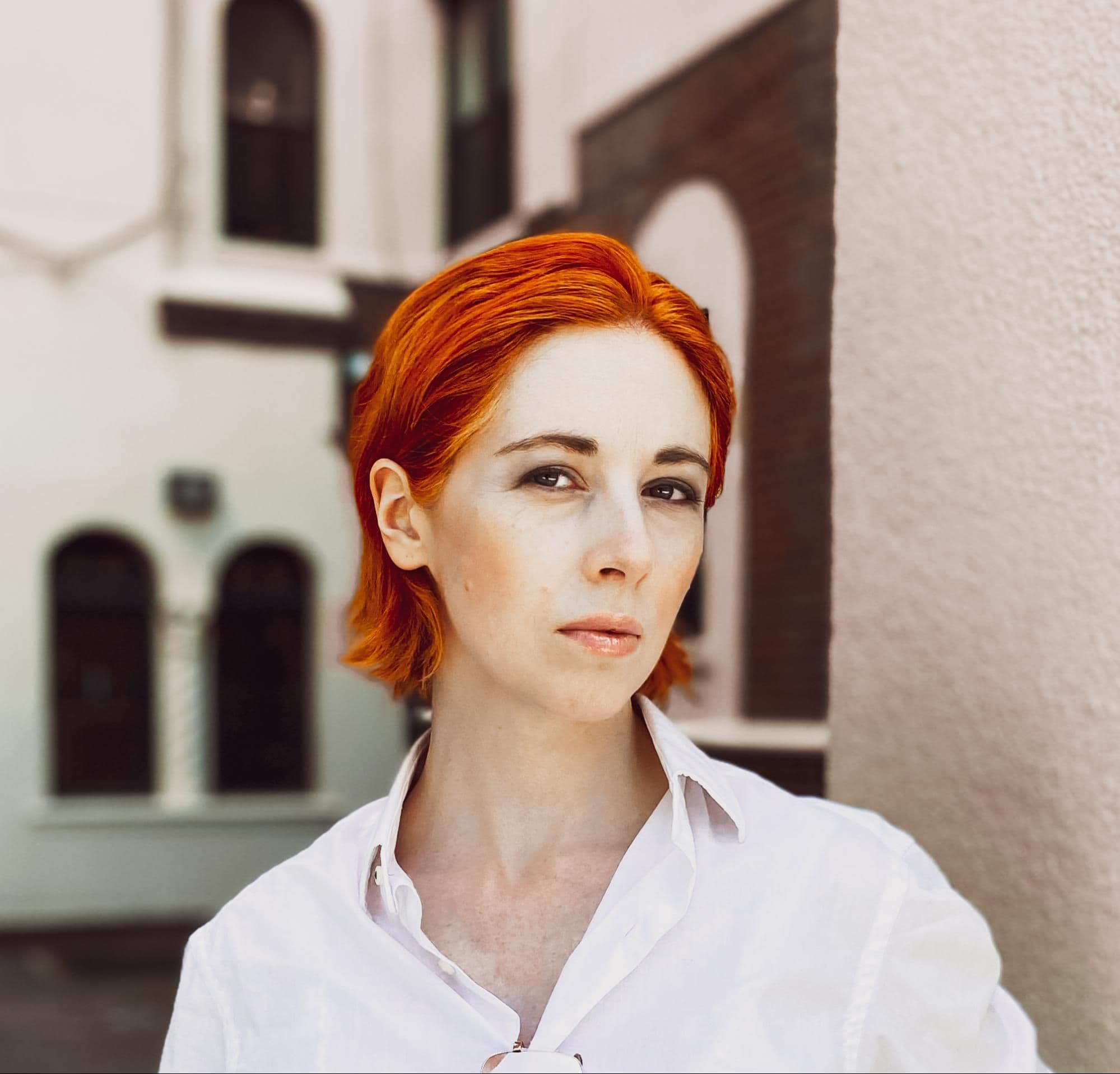
The Pain Within
Written by: Elvira Brodskaya
Being an asylum seeker means being in constant mental pain. Is there a solution?
When I came to the US, I felt l like I'd been handed a new life. Everything seemed so new and fresh, full of opportunities I never had before. And also, everything seemed so safe.
That’s why I was frustrated when I visited a meeting of that Russian-speaking LGBT+ asylum seeker support group and the first thing that our mentor told us was, a quote,
“We all are sick here and there’s no asylum seeker who wouldn’t have mental problems”.
I felt anger. I WAS NOT ILL. I couldn’t have any mental problems, no, on the opposite, I just came to the country of my dreams and reached the goal of my life.
Later, when the anger started to fade, I realized he was right.
I think that the realization came to me not suddenly but after many months when I tried so hard to become a real American. Or when in 2018 the line of waiting got the interview just disappeared. Or when I was waiting for a right to work legally for half of the year (after paying $400 and filling tons of papers). Or… maybe it was when the pandemic started and it turned out that people who paid their taxes, like me and my friends, do not have a right to federal help just because they do not have a proper “status” (like if the citizens paid more taxes which is untrue).
Asylum seekers who are the small invisible group whose rights are something that nobody discusses widely – have the deepest need in psychological care. But due to the specifics of our problems, we rarely get it in the right way. I would divide it into five parts:
- the immigration itself is one of the hardest and traumatic experiences even if it’s desired and planned
- the forced migration is double traumatizing because a lot of us never wished to leave our homelands
- we struggle with PTSD and fears that we brought from our countries (and local psychologists cannot help us – nor the online psychologists from our countries can because we need somebody who understands our unique experience)
- being NOT in the refugee status, we have to prove our right to be here – endlessly – and struggle with bureaucracy, which feels like a side unpaid job
- until – if - we get a Green card, many YEARS pass, and until we get it we face prejudice and lack of understanding because people cannot imagine how it could be being legal and not being “qualified aliens”.
When you’re a woman, this list is not full. Add feeling vulnerable, being dependent on their husbands and partners, being not able to find good work because of multiple family duties; being the last one who “deserves” care attention and help in the family or community. Add taking care of children that takes all of your time because it’s a “women’s duty” while your partner is making a career and adapting to the new life.
Are mental health and mental health care a key to easy adaptation and integration?
Yes.
Is mental health care available and easy to find and access for asylum seekers with their unresolved legal status, with periods of having no work authorization due to the long lines of waiting?
Can the asylum seeker find a space for meeting with a counselor when they have to earn money for life (without any help or basis)?
Is it easy to find a specialist who speaks your language, isn’t biased, can really understand your experience, not only give you medications?
NO.
Mental health for asylum seekers (women in particular) means having two things:
- a proper, understanding, and accepting professional help available
- legal and practical help, because it’s just impossible to feel good when you’re in a second from deportation or losing your job. In fact, half of our mental problems could be healed with a Greencard, because just try to live undocumented and in fear in the country of your dreams.
And mental health for women should include the specific services that might help a woman to leave her closed community or diaspora, with or without children – which is another big problem because the locals often idealize diaspora life while it can be super cruel for women.
Considering everything above, the development of the specific mental health services designed for asylum seekers is the only way to protect the mental health for women in our group. It’s almost useless to allow us to visit “any doctor”: what we need is a targeted inclusive help that responds to our unique situation.
Read More From Our Community
LGBTQ+ People and Health Inequity
Tanzilya Oren
In New York City, over 50,000 people, i.e., 4% of the 8.38 million residents, identify as non-binary and transgender people. We do not know precisely the number of immigrants among this population. Alex Trifonov, a community health representative and patient navigator at NYU Langone Health, on May 11, 2022, presented on the issue of health equity at an event at RUSA LGBTQ+. What is known is that stress caused by minority status and stigma leads to chronic stress and cardiovascular problems. Chronic stress, in turn, can cause substance use and abuse, addiction, and mental health issues.
Mr.Trifonov specifically spoke about health inequity among LGBTQ+ people regarding cancer. He talked about very low levels, lower than immigrant populations, of preventative healthcare utilization among LGBTQ+ patients due to the abovementioned minority stress and consequent avoidance of medical care. At the same time, across the United States, over 80,000 LGBTQ+ people receive a cancer diagnosis every year. Lesbians and bisexual people have a double risk of acquiring cancer diagnoses. Transgender and nonbinary patients have double the chance of getting cancers caused by infectious diseases. Gay men are diagnosed with anal and prostate cancers and cancers caused by HIV younger than other patients.
Seeking Work in One's Professional Field of Expertise: Resources for Obtaining Equivalency of Credentials in the U.S. as an Asylum Seeker or Migrant
Julia
As an immigrant to the US, one’s ability to find meaningful, dignified, and safe employment varies greatly based on one’s recognized legal status. For asylum seekers who are waiting for their asylum claim to be processed, legal job opportunities are limited and risk of human rights violations is high. Although asylum policy in the US is challenging at best, in NYC there are many community organizations working to fill some of the gaps and help provide services for asylum seekers and other migrants that are eager to find meaningful, dignified, and safe employment.
Asylum seekers and other migrants face challenges in finding meaningful work for various reasons. Difficulty obtaining recognition for studies completed in their home country, limited access to educational credentials and related paperwork due to relocation, certification differences, and language barriers are among the most pervasive. Difficulty transferring professional credentials from one’s home country to the United States is a challenge preventing many asylum seekers from finding employment in which they can apply and use their expertise.
My Internship with Unaccompanied Minors: Learning About Resilience and Hope
Sandy
A group of teenage girls sat silently at three tables in the dining room. The girls wore identical gray sweatpants and sweaters but had different hairstyles. It was shortly before 9 am. They had eaten breakfast and were waiting to walk over to their classroom. The girls were small in height, had brown skin, and didn’t look very excited to head to school. Pretty much like other typical teenage girls. As I made my way through the dining room, I said, “Buenos Dias Chicas!” A few girls responded with “Buenos Dias”, some smiled back, and others remained silent.
It took a while for the girls to become familiar with seeing me three times a week. The “clients” of this department were unaccompanied children waiting to reunite with their families. Teenagers from different countries, some spoke more than one language. For the first few weeks, I’ve only listened to their stories and learned why these adolescents chose to leave their homes, how they arrived at the U.S/Mexico border, and how they were adjusting to the program. Some departed their countries for better educational opportunities; some left to search for work to support their families, and others were looking to escape violence or abuse. Many of these child migrants, however, traveled alone. And carried their traumas, alone.
Ambiguous Loss
Sedef
It is hard to be the newcomer, the new person, or the one who is so unfamiliar with a different and foreign environment. Anyone around the world experiences anxiety stepping into a new place within a group of new people. We usually rely on our acquaintances and friends to introduce and make this transition smoother. But what happens when we are forced out of our familiar surroundings and need to leave our hometowns, homes, and states to flee from some disaster to a place that we know no one?
Stepping into to unknown is already hard. When we add the multitudes of losses we experience to the existing fear and anxiety of the unfamiliar and unknown, it is even more challenging. A migrant who had to leave their home without the guarantee of going back had to leave more than just their home behind. Sometimes, people leave behind their parents, and sometimes, they have to leave their kids, spouses, lovers, and pets. Sometimes they even need to leave behind the familiar sounds of their mother tongue. Songs of the local birds, the taste of the usual morning cup, the sounds of the local streets, the sights of their neighborhood, the aroma of the meals shared with the dear faces of loved ones, the way the sun lays its rays before it sets in their bedroom, and all those comfortably familiar details are left behind. The layers and layers of losses are there in every migrant's story.
How do you feel?
Daniel
“When the truth is finally recognized, survivors can begin their recovery”
- Judith Herman M.D.
Overview of Gender-Based Violence Against Women (GBVAW)
Chloe Sarantopoulos
Across the globe, 1 in 3 women–an estimated 736 million–are subjected to physical or sexual violence perpetrated by an intimate partner, or sexual violence from a non-partner-–a number that has remained largely unchanged over the past decade (WHO, 2021).
Unfortunately, this alarming statistic is likely to be significantly lower than the true figure, given the high levels of stigma and under-reporting of abuse. Gender-Based Violence Against Women (GBVAW) disproportionality affects low and lower-middle-income countries and regions, with twenty-two percent of women living in ‘least developed countries’ subjected to Intimate Partner Violence (IPV) in the past 12 months (WHO, 2021). The intersecting and compounding nature of violence against forced migrant women prevails across temporal and geographical contexts. GBVAW is rampant around the world and an impending cause for migration, forcing countless women and children to flee abuse at home and attempt to seek safety in a new country.
Notes from the Field: The Importance of the Term “Asylum Seeker” & How We Use It
Allison
I invite you to participate in a quick exercise with me: Open a new tab on your internet browser and go to Google. Type in “social services for asylum seekers.” Once you scroll past the ads, you will likely see a Google Maps search of nearby social service organizations. What are they? Who do they serve? Now, keep scrolling. What else comes up?
For me, living in one of the five boroughs of New York City, the top three organizations that come up on Google Maps all have the terms “refugee” or “refugees” in their title. And, when I keep scrolling, I see links to organizations and programs that specifically cater to refugees and asylees (people who have already been granted asylum). But what about asylum seekers?
